Projects
Climate Projects Approved in Mozambique
Get to know the projects approved under the Green Climate Fund (GCF) that contribute to strengthening climate resilience, promoting access to clean energy, protecting ecosystems and strengthening food security in Mozambique. These initiatives cover different sectors and promote sustainable solutions to adapt and mitigate climate change, with an impact on the country's communities and development.
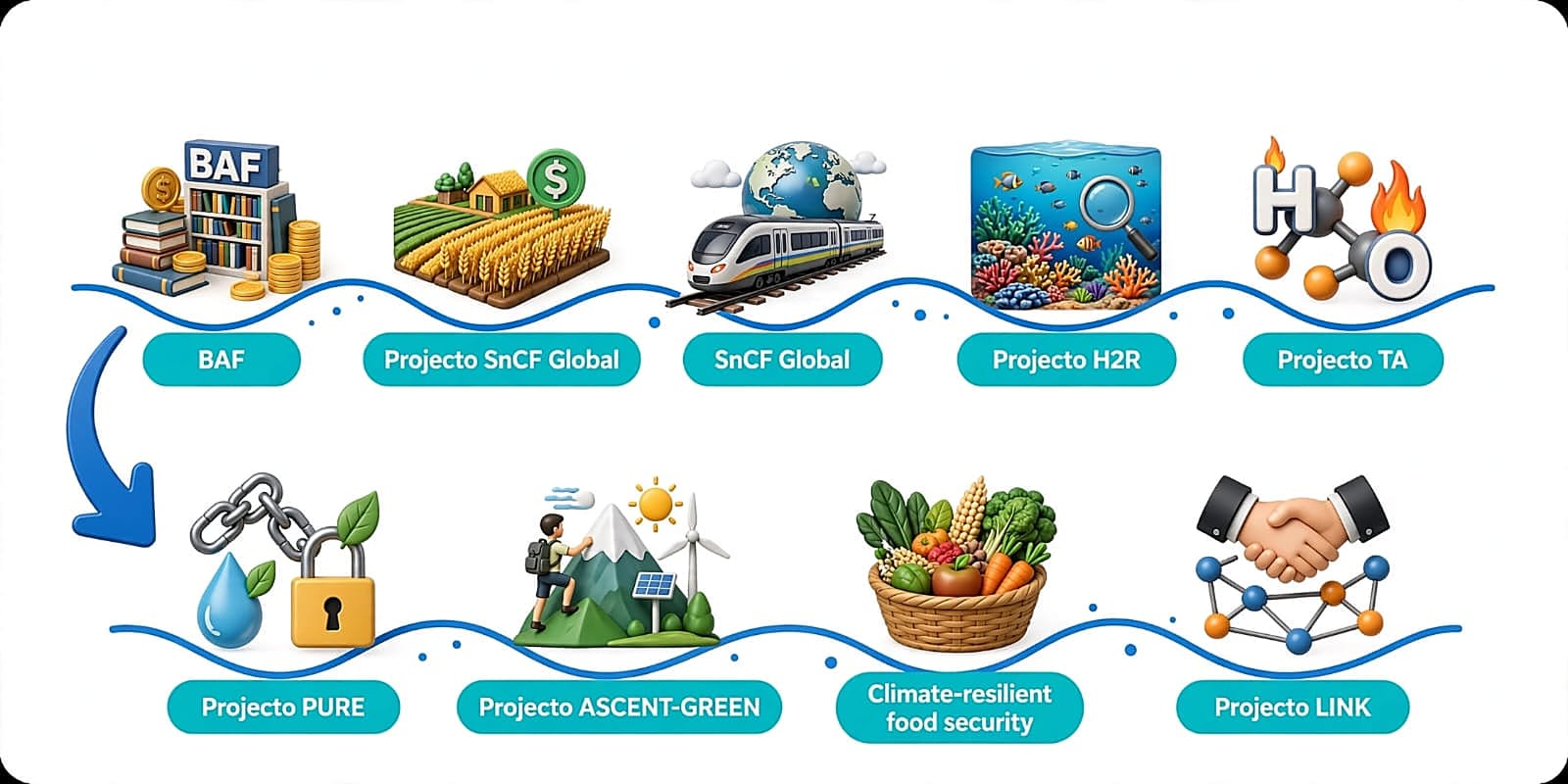
The BlueAction Fund (BAF) Ecosystem-Based Adaptation Program in the Western Indian Ocean aims to protect and restore essential marine ecosystems — like mangroves, coral reefs and sea meadows — to strengthen the climate resilience of more than 450 000 people in vulnerable coastal areas of Madagascar, Mozambique, South Africa and Tanzania. By implementing ecological adaptation measures and strengthening Protected Marine Areas, the initiative protects populations from extreme weather phenomena, develops sustainable livelihoods and promotes inclusive resource management focusing on gender equity.
Accredited entity
Kreditanstalt für Wiederaufbau (KFW
Amount
64.8 M USD
Geographical scope
Regional (4 countries)
Climate use
Adaptation
The Energy Access Support Mechanism (EFSA) aims to provide emergency liquidity through subordinated, non-guaranteeed and low-cost capital to small and medium-sized energy companies outside the network, protecting clean energy supply chains from the economic impacts of the COVID-19 pandemic. By preventing failures and ensuring operational continuity, the project ensures continuous access for vulnerable populations to sustainable electricity and cooking solutions. This intervention supports the energy transition and prevents the retrograde use of fossil fuels, with the goal of mitigating 1.3 million tons of equivalent carbon dioxide emissions.
Accredited entity
Acumen Fund, Inc.
Amount
60 M USD
Geographical scope
Regional (9 countries)
Climate use
Mitigation
The main objective of the Global Global Global Climate Fund (SnCF Global) – Equity is to mobilise institutional private capital for subnational medium-scale climate mitigation and adaptation infrastructure projects that face a persistent funding deficit. Using a mixed financing structure with a share of the Green Climate Fund’s reference capital worth 150 million US dollars to absorb the risk of first loss, the fund reduces the risk of investments ranging from 5 million to 75 million US dollars, making them attractive to commercial investors. By channeling this equity to assets in the areas of sustainable energy, waste management and sustainable agriculture in 42 developing economies, the project enables municipal and regional authorities to implement certified and localized climate solutions as well as Nature-Based Solutions.
Accredited entity
Pegasus Capital Advisers
Amount
750 M USD
Geographical scope
Regional (42 countries)
Climate use
Mitigation
The objective of the Global Fund Investment Window for Coral Reefs (GFCR) is to catalyze private commercial investment in blue economy initiatives that protect, restore and strengthen the resilience of coral reef ecosystems vulnerable to climate change. When using a mixed financing structure — based on an initial share of the Green Climate Fund risk capital worth 125 million US dollars — the fund reduces the risks of coastal companies, allowing them to overcome market barriers that normally distance traditional investors. By applying capital to sustainable aquaculture, eco-tourism favourable to reefs and coastal waste management in 17 developing countries, the project aims to transform local economies, away from destructive marine practices, while ensuring the long-term survival of core coral networks and coastal communities.
Accredited entity
Pegasus Capital Advisers
Amount
500 M USD
Geographical scope
Regional (17 countries)
Climate use
Adaptation
The main objective of the Acumen Hardest-to-Reach (H2R) initiative is to combat energy poverty and universalize access to electricity by financing solar solutions outside the network in the most isolated and economically vulnerable regions of Sub-Saharan Africa. Using a mixed US funding structure$ 250 million — supported by first loss capital of Green Climate Fund — the project aims to unlock neglected markets by providing patient capital and scalable debt financing to local solar energy companies. By replacing the use of polluting fossil fuels such as kerosene and diesel generators, the initiative aims to benefit some 70 million people, create thousands of green jobs and mitigate the emission of up to 5 million tonnes of carbon dioxide.
Accredited entity
Acumen Fund, Inc.
Amount
250 M USD
Geographical scope
Regional (16 countries)
Climate use
Transversal
The objective of the Global Subnational Climate Fund (AT) Technical Assistance Mechanism is to eliminate the lack of funding for medium-sized climate initiatives, transforming local infrastructure concepts into viable and commercially attractive investments at an early stage. Acting as the project preparation arm of a parallel private capital fund, this grant-funded mechanism reduces the risk of sustainable energy, waste management and sustainable agriculture projects through rigorous feasibility studies, capacity building and mandatory Gold Standard impact certification. By integrating Nature-Based Solutions and aligning with local regulation on infrastructure design, the mechanism mobilises private institutional capital in 42 developing economies to accelerate regional efforts to mitigate and adapt to climate change.
Accredited entity
International Union for Conservation of Nature (IUCN)
Amount
28 M USD
Geographical scope
Regional (42 countries)
Climate use
Mitigation
The main objective of PURE Rural Mozambique Climate Project is to strengthen climate resilience and expand access to electricity in isolated rural communities in Mozambique, where the rate of electricity exclusion is historically high. Through a mixed financing model led by Enabel and FUNAE, the project aims to implement decentralised solar mini-networks and boost the Productive Use of Renewable Energy (PURE), with a special focus on sustainable irrigation and agricultural processing systems. By empowering national institutions and replacing the use of fossil fuels and traditional biomass with clean technologies, the initiative protects food security from extreme climate shocks and ensures the mitigation of about 399,131 tons of equivalent CO2 emissions.
Accredited entity
Enabel
Amount
49.5 USD
Geographical scope
National
Climate use
Transversal
The main objective of the programme ASCENT-GREEN: Resilient Energy Access for Inclusive Development is to universalize access to clean electricity and sustainable cooking technologies for more than 40 million people in 21 countries in East and Southern Africa, integrating the Global Mission 300 initiative. Through a mixed funding platform of about US$ 695 million — colluded by the World Bank and the Green Climate Fund — the project aims to unlock private investments in the Distributed Renewable Energy (DRE) sector by providing affordable loans and exchange-rate and credit risk mitigation mechanisms. By focusing on institutional training and support for small local businesses, the initiative will promote inclusive and resilient development in rural households, fragile contexts and women-led businesses.
Accredited entity
International Bank for Reconstruction and Development and International Development Association
Amount
695 USD
Geographical scope
Regional (21 countries)
Climate use
Transversal
The main objective of the project is to strengthen food security and nutritional resilience of vulnerable small farmers in Mozambique — with special focus on women — in the face of recurrent droughts and climate shocks in the provinces of Gaza and Tete. Implemented by the World Food Programme (WFP), the initiative uses an integrated risk management approach that combines the introduction of conservation farming practices with access to local meteorological services for agricultural planning. By linking these actions to financial tools, such as agricultural insurance indexed to climate conditions and community savings and rotating credit groups, the project reduces the risks of agricultural activity, reduces post-harvest losses and enables rural families to diversify their incomes in a sustainable manner.
Accredited entity
World Food Programme
Amount
10 M USD
Geographical scope
National
Climate use
Adaptation
The main objective of the LINK project is to strengthen the climate resilience of highly vulnerable rural communities in Mozambique through systematic integration between local adaptation planning and government social protection networks. Implemented by Save the Children Australia, the initiative supports the decentralised authorities of nine districts of the provinces of Gaza, Manica and Tete to design Local Adaptation Plans (PLAs) and integrate them into public budgets. By channeling support through the Productive Social Action Programme (PSP), the project enables the engagement of households in situations of extreme poverty and led by women in resilient public works and solutions based on nature, ensuring a socio-economic security network capable of mitigating the impacts of droughts and cyclones.
Accredited entity
Save the Children Australia
Amount
10 M USD
Geographical scope
National
Climate use
Adaptation
The BlueAction Fund (BAF) Ecosystem-Based Adaptation Program in the Western Indian Ocean aims to protect and restore essential marine ecosystems — like mangroves, coral reefs and sea meadows — to strengthen the climate resilience of more than 450 000 people in vulnerable coastal areas of Madagascar, Mozambique, South Africa and Tanzania. By implementing ecological adaptation measures and strengthening Protected Marine Areas, the initiative protects populations from extreme weather phenomena, develops sustainable livelihoods and promotes inclusive resource management focusing on gender equity.
Accredited entity
Kreditanstalt für Wiederaufbau (KFW
Amount
64.8 M USD
Geographical scope
Regional (4 countries)
Result area
Adaptation
The Energy Access Support Mechanism (EFSA) aims to provide emergency liquidity through subordinated, non-guaranteeed and low-cost capital to small and medium-sized energy companies outside the network, protecting clean energy supply chains from the economic impacts of the COVID-19 pandemic. By preventing failures and ensuring operational continuity, the project ensures continuous access for vulnerable populations to sustainable electricity and cooking solutions. This intervention supports the energy transition and prevents the retrograde use of fossil fuels, with the goal of mitigating 1.3 million tons of equivalent carbon dioxide emissions.
Accredited entity
Acumen Fund, Inc.
Amount
60 M USD
Geographical scope
Regional (9 countries)
Result area
Mitigation
The main objective of the Global Global Global Climate Fund (SnCF Global) – Equity is to mobilise institutional private capital for subnational medium-scale climate mitigation and adaptation infrastructure projects that face a persistent funding deficit. Using a mixed financing structure with a share of the Green Climate Fund’s reference capital worth 150 million US dollars to absorb the risk of first loss, the fund reduces the risk of investments ranging from 5 million to 75 million US dollars, making them attractive to commercial investors. By channeling this equity to assets in the areas of sustainable energy, waste management and sustainable agriculture in 42 developing economies, the project enables municipal and regional authorities to implement certified and localized climate solutions as well as Nature-Based Solutions.
Accredited entity
Pegasus Capital Advisers
Amount
750 M USD
Geographical scope
Regional (42 countries)
Result area
Mitigation
The objective of the Global Fund Investment Window for Coral Reefs (GFCR) is to catalyze private commercial investment in blue economy initiatives that protect, restore and strengthen the resilience of coral reef ecosystems vulnerable to climate change. When using a mixed financing structure — based on an initial share of the Green Climate Fund risk capital worth 125 million US dollars — the fund reduces the risks of coastal companies, allowing them to overcome market barriers that normally distance traditional investors. By applying capital to sustainable aquaculture, eco-tourism favourable to reefs and coastal waste management in 17 developing countries, the project aims to transform local economies, away from destructive marine practices, while ensuring the long-term survival of core coral networks and coastal communities.
Accredited entity
Pegasus Capital Advisers
Amount
500 M USD
Geographical scope
Regional (17 countries)
Result area
Adaptation
The main objective of the Acumen Hardest-to-Reach (H2R) initiative is to combat energy poverty and universalize access to electricity by financing solar solutions outside the network in the most isolated and economically vulnerable regions of Sub-Saharan Africa. Using a mixed US funding structure$ 250 million — supported by first loss capital of Green Climate Fund — the project aims to unlock neglected markets by providing patient capital and scalable debt financing to local solar energy companies. By replacing the use of polluting fossil fuels such as kerosene and diesel generators, the initiative aims to benefit some 70 million people, create thousands of green jobs and mitigate the emission of up to 5 million tonnes of carbon dioxide.
Accredited entity
Acumen Fund, Inc.
Amount
250 M USD
Geographical scope
Regional (16 countries)
Result area
Transversal
The objective of the Global Subnational Climate Fund (AT) Technical Assistance Mechanism is to eliminate the lack of funding for medium-sized climate initiatives, transforming local infrastructure concepts into viable and commercially attractive investments at an early stage. Acting as the project preparation arm of a parallel private capital fund, this grant-funded mechanism reduces the risk of sustainable energy, waste management and sustainable agriculture projects through rigorous feasibility studies, capacity building and mandatory Gold Standard impact certification. By integrating Nature-Based Solutions and aligning with local regulation on infrastructure design, the mechanism mobilises private institutional capital in 42 developing economies to accelerate regional efforts to mitigate and adapt to climate change.
Accredited entity
International Union for Conservation of Nature (IUCN)
Amount
28 M USD
Geographical scope
Regional (42 countries)
Result area
Mitigation
The main objective of PURE Rural Mozambique Climate Project is to strengthen climate resilience and expand access to electricity in isolated rural communities in Mozambique, where the rate of electricity exclusion is historically high. Through a mixed financing model led by Enabel and FUNAE, the project aims to implement decentralised solar mini-networks and boost the Productive Use of Renewable Energy (PURE), with a special focus on sustainable irrigation and agricultural processing systems. By empowering national institutions and replacing the use of fossil fuels and traditional biomass with clean technologies, the initiative protects food security from extreme climate shocks and ensures the mitigation of about 399,131 tons of equivalent CO2 emissions.
Accredited entity
Enabel
Amount
49.5 USD
Geographical scope
National
Result area
Transversal
The main objective of the programme ASCENT-GREEN: Resilient Energy Access for Inclusive Development is to universalize access to clean electricity and sustainable cooking technologies for more than 40 million people in 21 countries in East and Southern Africa, integrating the Global Mission 300 initiative. Through a mixed funding platform of about US$ 695 million — colluded by the World Bank and the Green Climate Fund — the project aims to unlock private investments in the Distributed Renewable Energy (DRE) sector by providing affordable loans and exchange-rate and credit risk mitigation mechanisms. By focusing on institutional training and support for small local businesses, the initiative will promote inclusive and resilient development in rural households, fragile contexts and women-led businesses.
Accredited entity
International Bank for Reconstruction and Development and International Development Association
Amount
695 USD
Geographical scope
Regional (21 countries)
Result area
Transversal
The main objective of the project is to strengthen food security and nutritional resilience of vulnerable small farmers in Mozambique — with special focus on women — in the face of recurrent droughts and climate shocks in the provinces of Gaza and Tete. Implemented by the World Food Programme (WFP), the initiative uses an integrated risk management approach that combines the introduction of conservation farming practices with access to local meteorological services for agricultural planning. By linking these actions to financial tools, such as agricultural insurance indexed to climate conditions and community savings and rotating credit groups, the project reduces the risks of agricultural activity, reduces post-harvest losses and enables rural families to diversify their incomes in a sustainable manner.
Accredited entity
World Food Programme
Amount
10 M USD
Geographical scope
National
Result area
Adaptation
The main objective of the LINK project is to strengthen the climate resilience of highly vulnerable rural communities in Mozambique through systematic integration between local adaptation planning and government social protection networks. Implemented by Save the Children Australia, the initiative supports the decentralised authorities of nine districts of the provinces of Gaza, Manica and Tete to design Local Adaptation Plans (PLAs) and integrate them into public budgets. By channeling support through the Productive Social Action Programme (PSP), the project enables the engagement of households in situations of extreme poverty and led by women in resilient public works and solutions based on nature, ensuring a socio-economic security network capable of mitigating the impacts of droughts and cyclones.
Accredited entity
Save the Children Australia
Amount
10 M USD
Geographical scope
National
Result area
Adaptation
Projects and Initiatives Climate
Explore the portfolio of projects supported by international climate funds to promote adaptation to climate change, reduce greenhouse gas emissions and boost sustainable development in Mozambique. Get to know initiatives, implementing entities, intervention sectors and associated funding, covering areas such as energy, agriculture, forests, water resource management and biodiversity conservation.





You want to know how to access these funds?
Team up with the right information. Explore the eligibility criteria, necessary documentation and talk to experts who can support you in the application.